
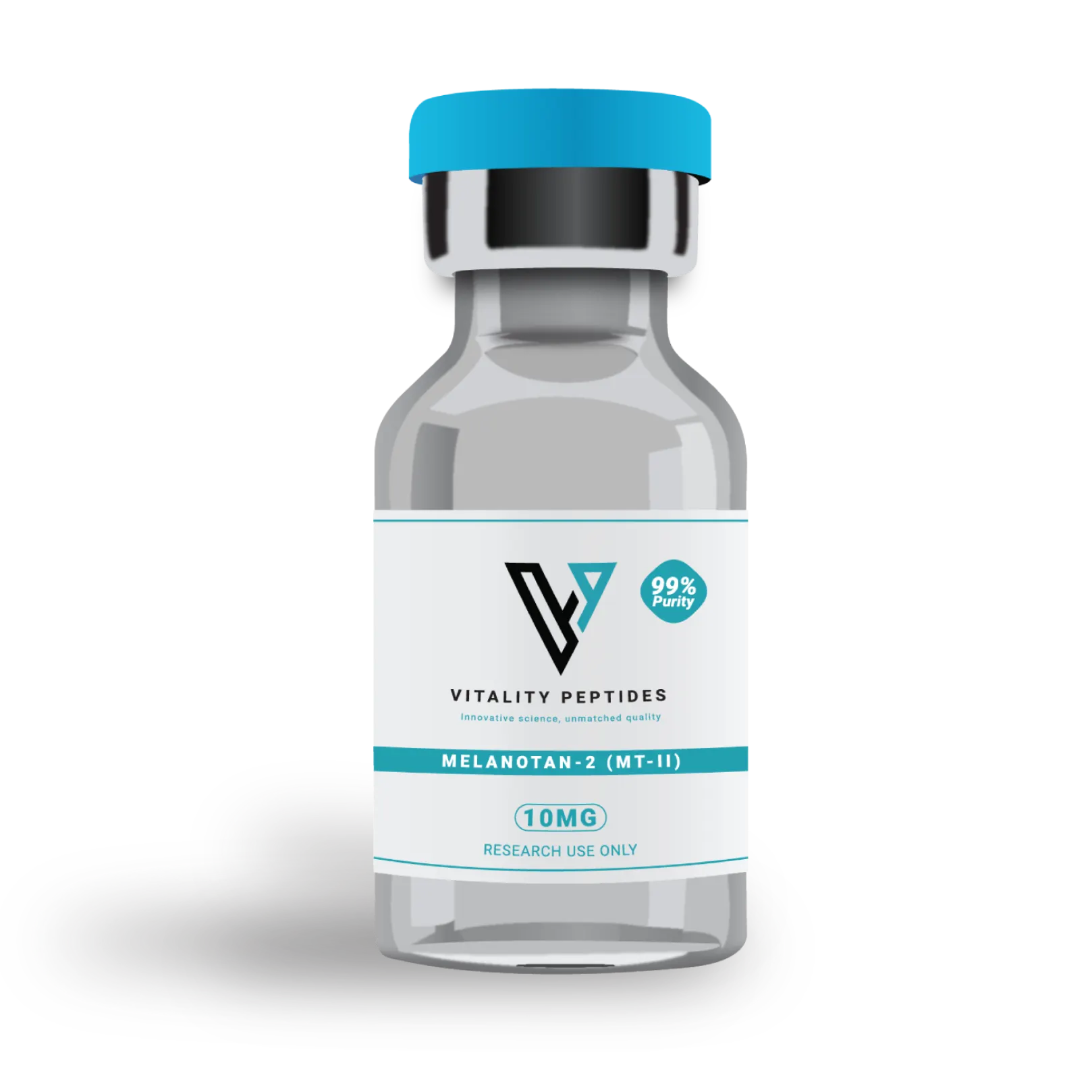
MELANOTAN-2 (MT-II)
£30.00
MELANOTAN-2 (MT-II)
Melanotan 2 is a synthetic cyclic peptide analog of alpha-melanocyte-stimulating hormone (α-MSH), a naturally occurring hormone produced in the pituitary gland. α-MSH plays a crucial role in regulating pigmentation, appetite, and sexual function by binding to melanocortin receptors (MC1R through MC5R) found on melanocytes, adipocytes, and neurons.
Developed at the University of Arizona in the late 1980s, MT-II was initially researched as a treatment for erythropoietic protoporphyria (EPP), a rare disorder causing extreme sun sensitivity. It evolved from an earlier compound, Melanotan 1 (afamelanotide, now FDA-approved as Scenesse for EPP). MT-II is more potent and has broader receptor affinity, particularly for MC1R (skin pigmentation) and MC4R (appetite/erectile function).
Unlike topical sunscreens or self-tanners like dihydroxyacetone (DHA), MT-II works systemically by mimicking α-MSH to upregulate eumelanin production—the dark pigment responsible for natural tans. This results in a photoprotective effect, potentially reducing UV damage risks.
Chemical Profile:
- Structure: 7-amino acid cyclic peptide.
- Half-life: ~1 hour (rapid onset, effects last days/weeks).
- Administration: Typically subcutaneous injection (research contexts).
MT-II’s dual action on pigmentation and libido has made it a staple in peptide research communities, though it’s not approved for cosmetic use by regulatory bodies like the FDA or EMA.
How Does Melanotan 2 Work? The Science Behind the Tan
MT-II exerts its effects by agonizing melanocortin receptors, primarily MC1R on skin melanocytes. Here’s the step-by-step mechanism:
- Binding and Activation: MT-II binds with high affinity to MC1R, triggering a cascade via cyclic AMP (cAMP) pathways.
- Melanin Synthesis: This upregulates tyrosinase, the enzyme converting tyrosine to eumelanin. Result? Darker skin, freckle reduction, and even moles may darken.
- Photoprotection: Increased melanin absorbs UV rays, reducing DNA damage and sunburn risk—mimicking genetic traits of darker skin types.
- Bonus Effects: MC3R/MC4R activation influences satiety (appetite suppression) and libido (erectile function via nitric oxide pathways).
Key Studies:
- A 1996 Journal of Investigative Dermatology study showed MT-II induced tanning in fair-skinned volunteers after minimal UV exposure.
- Phase I trials (2000s) confirmed dose-dependent pigmentation without significant toxicity.
- Animal models demonstrate MT-II’s neuroprotective potential via anti-inflammatory MC1R signaling.
Unlike UV tanning (which risks skin cancer via DNA mutations), MT-II promotes constitutive melanogenesis—a “base tan” that enhances with low sun exposure. Research suggests it could reduce melanoma risk in high-risk groups, though human data is preliminary.
Potential Benefits of Melanotan 2
MT-II’s research profile highlights several compelling applications:
1. Rapid Skin Tanning and Photoprotection
- Achieves a deep, natural-looking tan in days, ideal for those with fair skin (Fitzpatrick types I-II).
- Studies show 50–100% increase in minimal erythema dose (MED)—the UV threshold for burning.
- Potential for vitiligo treatment by repigmenting hypopigmented areas.
2. Libido and Erectile Enhancement
- MC4R agonism boosts sexual arousal; early trials reported spontaneous erections in men.
- A 2004 International Journal of Impotence Research study noted improved erectile function in psychogenic ED cases.
- Anecdotal reports extend to female libido via central nervous system effects.
3. Appetite Suppression and Weight Management
- MC4R activation mimics leptin signaling, reducing food intake.
- Rodent studies show 20–30% body weight reduction; human analogs like setmelanotide (Imcivree) validate this for rare genetic obesity.
4. Emerging Research Areas
- Anti-Inflammatory: MC1R reduces cytokines in psoriasis models.
- Neuroprotection: Potential in Parkinson’s via dopamine regulation.
- Cardiovascular: Lowers blood pressure in hypertensive models.
Side Effects and Safety Concerns
While promising, Melanotan 2 is not without risks. Most data comes from early human trials and user reports:
Common Side Effects
- Nausea and Flushing: Dose-dependent (MC1R/MC3R); peaks 1–2 hours post-injection.
- Appetite Loss: Temporary, beneficial for some.
- Spontaneous Arousal: Erections or yawning in 80%+ of users.
- Darkening of Moles/Freckles: Reversible but monitorable.
Rare/Serious Risks
- Hyperpigmentation: Permanent in some areas (lips, gums).
- Renal Effects: Isolated reports of kidney stress (hydrate aggressively).
- Cardiovascular: Transient blood pressure changes.
- Long-Term Unknowns: No large-scale safety data; theoretical cancer risk from melanocyte proliferation (unsubstantiated).
Contraindications:
- Pregnancy/breastfeeding.
- History of melanoma or skin cancer.
- Renal/hepatic impairment.
Melanotan 2 vs. Other Tanning Peptides
| Feature | Melanotan 2 (MT-II) | Melanotan 1 (Afamelanotide) |
|---|---|---|
| Potency | High (broad receptors) | Moderate (MC1R-specific) |
| Tan Speed | 3–7 days | 7–14 days |
| Libido Effect | Strong | Minimal |
| Approval | None | FDA for EPP |
| Side Effects | More (nausea, arousal) | Fewer |
MT-II edges out for aesthetics but Melanotan 1 is safer for medical use.
Legal and Regulatory Status
MT-II remains a research chemical globally—not approved for human consumption by FDA, EMA, or MHRA. It’s classified as a new chemical entity under investigation. In research contexts, it’s used for studying melanocortin pathways, not cosmetics.
The Future of Melanotan 2 Research
Ongoing trials explore MT-II derivatives for:
- Obesity: MC4R drugs like bremelanotide (Vyleesi for HSDD).
- Skin Cancer Prevention: Topical formulations.
- Neurological Disorders: Alzheimer’s models show amyloid reduction.
Conclusion: Is Melanotan 2 Right for Research?
Melanotan 2 represents a breakthrough in synthetic peptide design, offering potent tanning, libido enhancement, and metabolic effects via melanocortin receptor agonism. Backed by decades of studies—from Arizona labs to modern trials—its photoprotective potential could revolutionize skin health. However, side effects like nausea and unknowns demand caution.
Reviews
There are no reviews yet.
Be the first to review “MELANOTAN-2 (MT-II)”