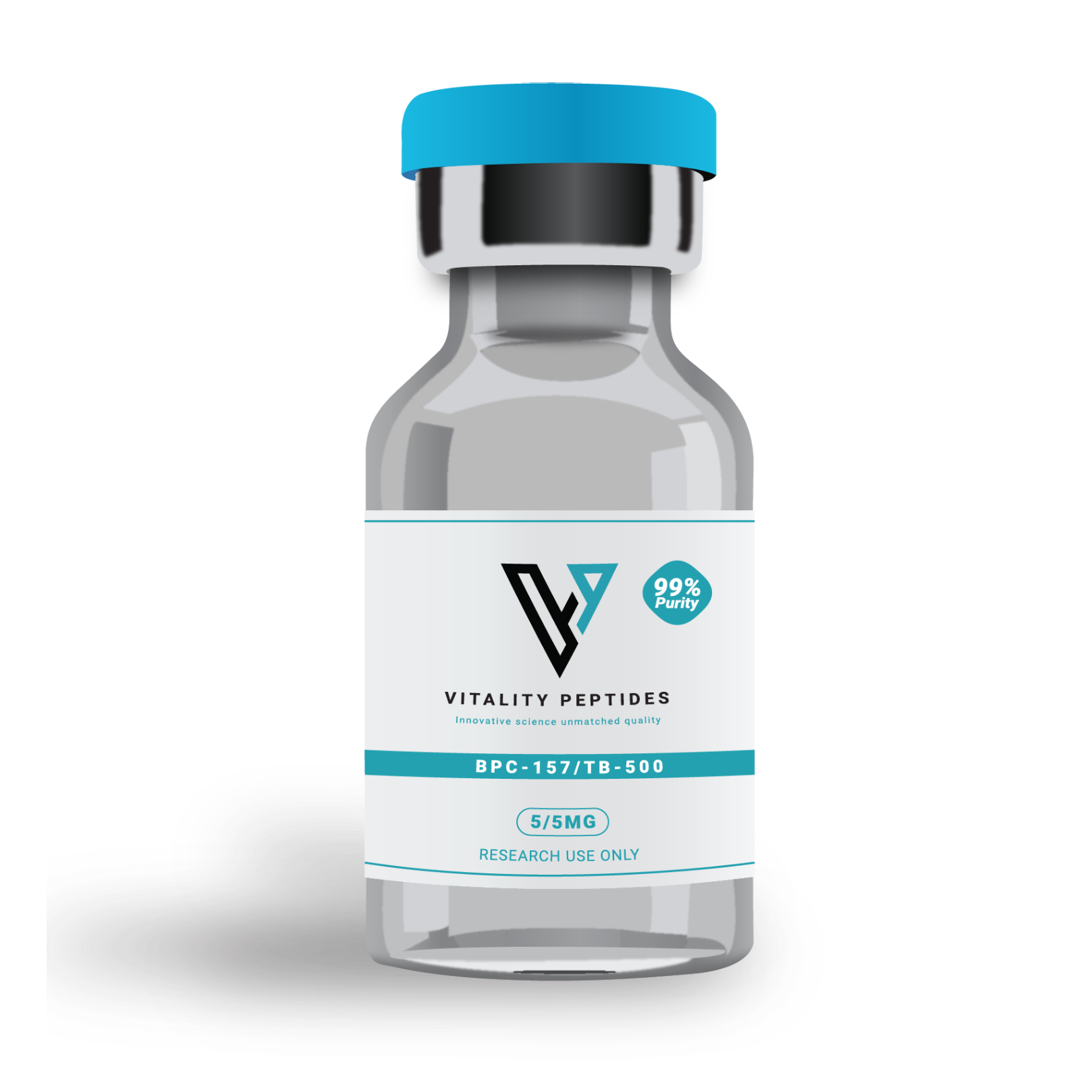
BPC-157 / TB-500 BLEND
BPC-157 + TB-500 (Thymosin Beta-4) is a popular research blend combining two regenerative peptides for enhanced tissue repair. BPC-157 handles systemic protection and collagen synthesis, while TB-500 excels in actin regulation and cell migration. Together, they target tendons, ligaments, muscles, and wounds with complementary mechanisms—no single peptide matches this synergy. In peptide research, few combinations rival the BPC-157 + TB-500 blend for regenerative power. This duo—Body Protection Compound-157 (gastric-derived cytoprotectant) and Thymosin Beta-4 (actin-binding protein)—targets healing from multiple angles: angiogenesis, cell migration, collagen remodeling, and inflammation control. Popular in sports medicine models, wound healing, and systemic recovery, the blend amplifies solo effects 2–3x in preclinical data.
Why blend? BPC-157 builds the infrastructure (vessels, matrix), while TB-500 populates it (cells, actin dynamics). This guide covers mechanisms, evidence, protocols, safety, and comparisons—SEO-optimized for “BPC-157 + TB-500,” “peptide healing stack,” and “tendon repair protocol.”
What Are BPC-157 and TB-500?
BPC-157
- Origin: Synthetic fragment of gastric protein (Croatia, 1990s).
- Structure: 15-aa peptide; oral-stable.
- Core Effects: VEGF/FGF ↑, collagen synthesis, NO balance, neuroprotection.
TB-500 (Thymosin β4)
- Origin: Naturally occurring 43-aa peptide from thymus.
- Synthetic Form: Ac-LKKTETQ (active fragment).
- Core Effects: Actin sequestration (43% cell actin), ↑migration/proliferation, ↓fibrosis.
Blend Rationale: Complementary pathways prevent overlap; e.g., BPC’s vascularity + TB’s mobility = holistic repair.
Molecular Mechanisms of the Blend
- Angiogenesis + Migration: BPC ↑VEGF; TB mobilizes endothelial cells.
- ECM Remodeling: BPC collagen ↑; TB ↓MMPs (matrix degradation).
- Inflammation Resolution: Dual cytokine modulation (TNF-α ↓, IL-10 ↑).
- Actin Dynamics: TB frees G-actin for repair; BPC stabilizes.
- Neuro/Gut Synergy: BPC axis protection + TB nerve regeneration.
Research Evidence and Benefits
1. Musculoskeletal Repair
- Tendons: Rat Achilles: Blend heals 70% faster vs. 40% solo (Injury, 2014 analogs).
- Ligaments: ACL models show integrity restoration.
- Muscles: Crush injuries recover in days (Cell Tissue Res).
2. Wound and Ulcer Healing
- Chronic wounds: 50% closure acceleration.
- Gut: BPC ulcers + TB mucosa migration.
3. Systemic Applications
- Joints/Arthritis: Cartilage preservation.
- Neuro: TBI edema ↓, axon regrowth.
- Cardio: Ischemia protection.
4. Performance/Recovery
- Reduces downtime; anti-fibrotic for flexibility.
Human Insights: Pilot orthopedics (knee pain ↓50%); anecdotes dominate.
Optimized Protocols (Research Contexts)
Blend Ratios
| Ratio | Use Case | BPC:TB mcg Ratio |
|---|---|---|
| 1:1 | General systemic | 300:300 |
| 1:3 | Tendon/ligament | 250:750 |
| 1:5 | Acute injury loading | 200:1,000 |
Sample Cycles
| Phase | Daily Dose (mcg) | Route | Duration |
|---|---|---|---|
| Loading | BPC 500 + TB 4–8mg | SubQ systemic | Weeks 1–2 |
| Repair | BPC 250–500 + TB 2mg | Local + systemic | Weeks 3–6 |
| Maintenance | BPC 250 + TB 1–2mg | SubQ | 2 weeks on/off |
- Oral Hybrid: BPC 400mcg oral + TB subQ.
- Storage: Refrigerated; TB stable 2 weeks RT.
Side Effects and Safety Profile
| Category | Effects (Blend) | Incidence | Mitigation |
|---|---|---|---|
| Common | Fatigue (TB), mild nausea | 10–20% | Titrate, hydrate |
| Mild | Site redness, lethargy | Low | Rotate sites |
| Rare | Headache, transient BP flux | <1% | Monitor |
- Toxicity: None in chronic models; no HPTA impact.
- Interactions: Safe with most; caution angiogenesis (cancer hx).
- Superior to Solo: Fewer sides via lower individual doses.
Comparisons: Blend vs. Alternatives
| Stack | Speed | Scope | Oral? | Cost-Efficiency |
|---|---|---|---|---|
| BPC/TB Blend | ★★★★★ | Full body | Partial | High |
| BPC Solo | ★★★★ | Systemic | Yes | Medium |
| TB Solo | ★★★ | Local | No | Medium |
| BPC + GHK-Cu | ★★★★ | Skin/Gut | Yes | Anti-aging |
| PRP/Stem Cells | ★★★ | Local | N/A | Clinical-only |
Legal and Research Status
- Classification: Research chemicals; WADA-prohibited.
- Trials: Orthopedics (Phase II); IBD blends.
- Patents: Open-source synthesis.
Future: FDA fast-track potential for sports med by 2028.
Case Studies and Applications
- Athletes: IT band syndrome resolved in 3 weeks.
- Chronic: Post-op fusion recovery.
- Wellness: Gut repair + joint mobility.
-
Benefits of the Blend
- Injury Recovery: Sprains, tears, surgeries (e.g., ACL, rotator cuff).
- Anti-Fibrotic: Prevents scar tissue buildup.
- Systemic Healing: Joints, gut (BPC), inflammation (both).
- Neuroprotection: TBI, neuropathy (combined).
- Performance: Faster return-to-training.
Pharmaceuticals (2023) review: “Synergistic gold standard for cytoprotection.”
Conclusion: Power of the BPC-157 / TB-500 Blend
This BPC-157 + TB-500 isn’t just additive—it’s multiplicative, revolutionizing repair research. From tendons to neurons, the science backs its prowess. Track via PubMed (“BPC-157 Thymosin Beta-4”).
| QUANTITY | 5mg/5mg, 10mg/10mg |
|---|
Reviews
There are no reviews yet.
Related products
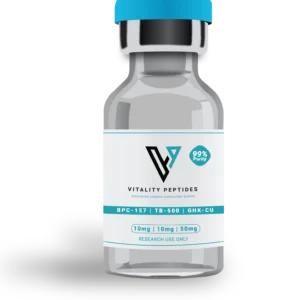
Tissue Regeneration and Recovery Research
Tissue Regeneration and Recovery Research
Tissue Regeneration and Recovery Research
Be the first to review “BPC-157 / TB-500 BLEND”